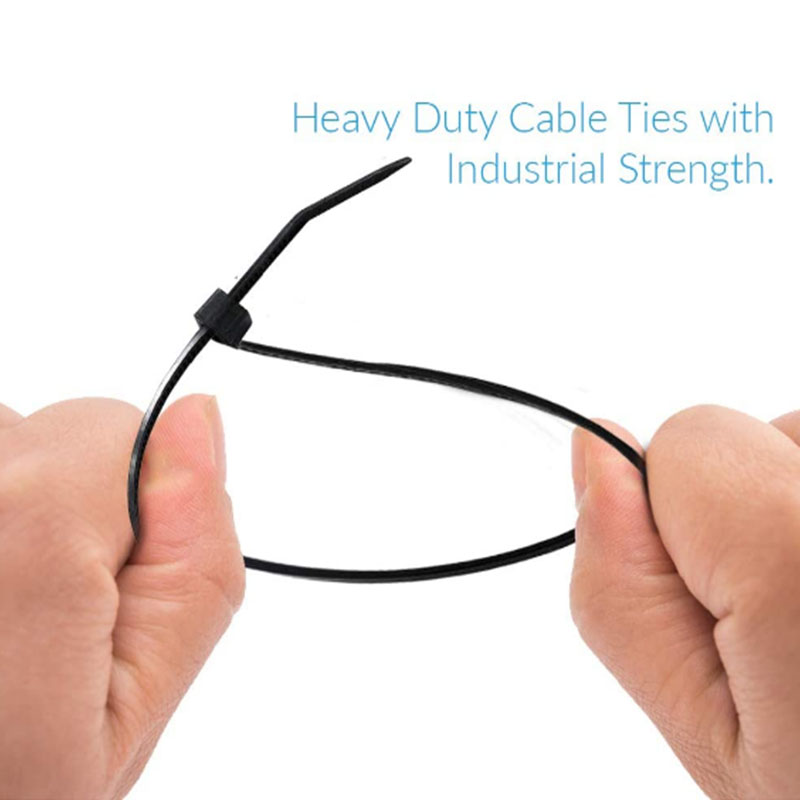
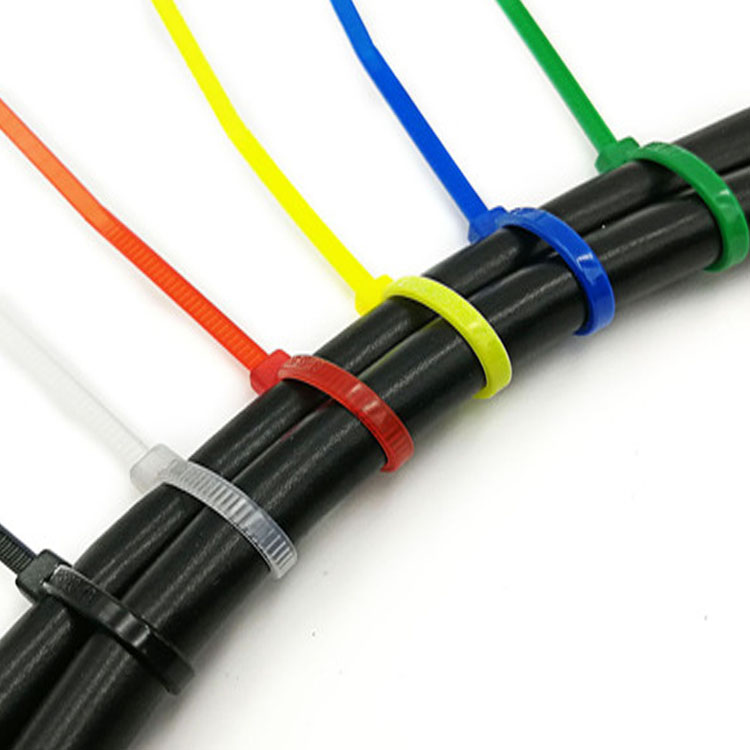
Mistake 1: Choosing a Cable Tie Only by Tensile Strength
This is probably the most common mistake.
Someone needs a cable tie, so they immediately look for the biggest number.
50 lbs.
120 lbs.
250 lbs.
A higher tensile strength sounds safer.
But cable management is not only about pulling force.
A cable tie installed inside a clean electrical cabinet and a cable tie installed outdoors next to industrial equipment are dealing with completely different conditions.
The real question is not:
"How strong is this cable tie?"
The better question is:
"Will this cable tie still perform in this environment?"
Temperature, sunlight, chemicals, vibration, and installation conditions all affect long-term performance.
A cable tie with the highest strength rating may still be the wrong choice if the material does not match the application.
Mistake 2: Using Indoor Cable Ties Outdoors
This is something engineers and maintenance teams see quite often.
A standard nylon cable tie is installed outdoors because it is convenient and available.
At first, everything looks perfect.
The cables are organized.
The installation is clean.
Nobody thinks about it again.
Then the seasons change.
The cable tie is exposed to sunlight, rain, and temperature changes every day.
Over time, the material starts to lose flexibility.
It may become harder.
It may become brittle.
Eventually, it breaks.
The frustrating part is that the problem usually appears long after the installation team has moved on.
For outdoor applications, engineers often choose UV resistant cable ties because the material is designed to handle long-term exposure.
Mistake 3: Ignoring Temperature Conditions
Not every industrial environment has the same temperature requirements.
A cable tie used in an office building has a much easier life than one installed near:
-
Motors
-
Heating equipment
-
Automotive systems
-
Manufacturing machinery
High temperatures can affect plastic materials over time.
The cable tie may still look normal, but its mechanical performance can gradually change.
That is why applications with continuous heat exposure often require heat stabilized cable ties.
The goal is not to find the strongest product.
The goal is to choose a material that can maintain performance under actual working conditions.
Mistake 4: Selecting the Wrong Size
Bigger does not always mean better.
This is another mistake that happens more often than people expect.
A cable tie that is too small may not provide enough holding capacity.
But a cable tie that is too large can also create problems.
The locking head may not grip properly.
The bundle may move more than expected.
The installation may not look as clean as it should.
Experienced installers usually consider:
The right size is the one that fits the application—not simply the largest one available.
Mistake 5: Forgetting About Future Maintenance
A cable installation is rarely completely finished forever.
Machines get upgraded.
Sensors get replaced.
New cables are added.
Production lines change.
But many cable management designs only consider the first installation.
This is where releasable cable ties can make a big difference.
In control panels, automation equipment, and systems that require regular maintenance, being able to reopen a cable bundle without cutting everything apart can save a lot of time.
Good engineering considers not only installation day.
It considers the person who will maintain the system five years later.
Mistake 6: Choosing the Cheapest Cable Tie
Price matters.
Nobody wants to overpay for a simple component.
But cable ties are a good example of where the lowest price is not always the lowest cost.
A failed cable tie may lead to:
-
Extra maintenance work
-
Production delays
-
Reinstallation costs
-
Unexpected downtime
The cost of replacing a few cable ties is small.
The cost of stopping a production line is not.
That is why many industrial customers focus more on reliability and consistency than the initial purchase price.
Final Thoughts
Cable ties are small components, but they are part of a much bigger system.
A good cable management solution is not created by choosing the strongest product available.
It comes from understanding the environment, the application, and what will happen years after installation.
The mistake is not choosing the wrong cable tie.
The mistake is choosing one without thinking about where it will actually be used.