2026-08-03
The Role of Cable Management in Solar Power Systems
When people think about solar power systems, they usually focus on the major components.
Solar panels.
Inverters.
Battery storage.
Mounting structures.
These are the parts that receive the most attention because they directly affect energy production.
However, behind every reliable solar installation, there are many smaller components working together to keep the system running safely.
Cable management is one of those details that is often overlooked.
From rooftop solar systems to large-scale solar farms, properly managing cables helps protect electrical wiring, simplify maintenance, and improve long-term system reliability.
Small components may not generate electricity, but they help protect the equipment that does.
Solar Cable Management Faces Long-Term Outdoor Challenges
Unlike many electrical systems installed indoors, solar installations spend their entire life exposed to the environment.
A solar cable installed today may need to perform reliably for decades.
During that time, cables and accessories are exposed to:
-
Strong UV radiation
-
Rain and humidity
-
High and low temperatures
-
Wind and vibration
-
Dust and outdoor pollution
These conditions create continuous stress on cable management components.
A cable tie that looks perfect during installation may face completely different challenges after years of outdoor exposure.
This is why choosing the right cable management solution is an important part of solar system design.
Why Cable Routing Matters in Solar Installations
A solar system may contain hundreds or thousands of meters of electrical cable.
Without proper cable organization, several problems can occur:
-
Cables hanging loosely under solar panels
-
Wires rubbing against metal structures
-
Increased risk of mechanical damage
-
Difficult maintenance and inspection
Good cable routing helps keep cables:
-
Securely positioned
-
Away from sharp edges
-
Protected from unnecessary movement
-
Easier to inspect
For installers, proper cable management also creates a cleaner and more professional installation.
Why Standard Cable Ties May Not Be Enough for Solar Applications
One of the most common mistakes in solar installation is choosing cable ties based only on initial cost.
A standard nylon cable tie may perform well in indoor applications.
However, solar installations are different.
The same product may experience years of:
-
Direct sunlight
-
Temperature changes
-
Outdoor moisture
Over time, unsuitable materials may lose flexibility and become brittle.
When cable ties fail, cables can become loose, creating additional maintenance problems.
For outdoor solar projects, installers often choose solutions designed for longer service life, such as:
-
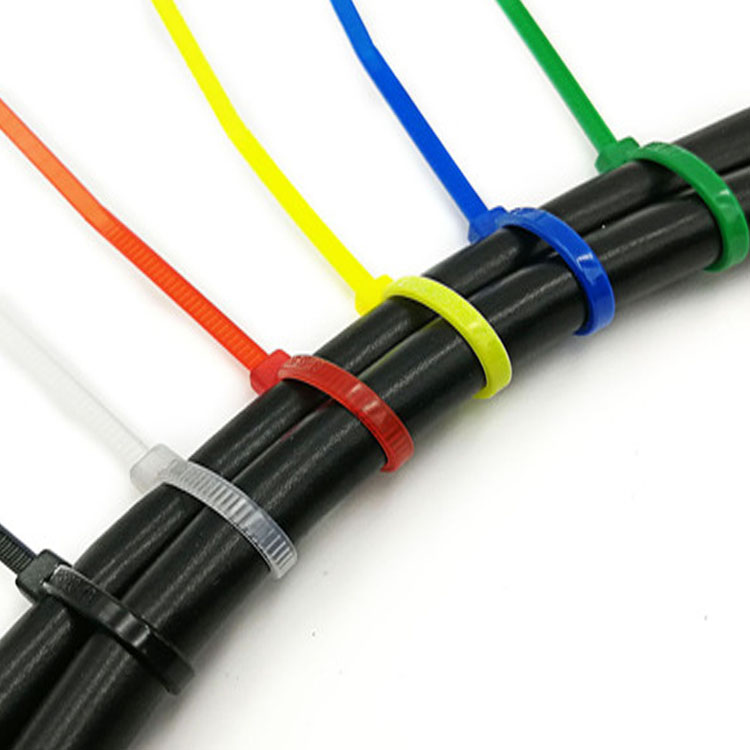
UV resistant cable ties
-
Heat stabilized cable ties
-
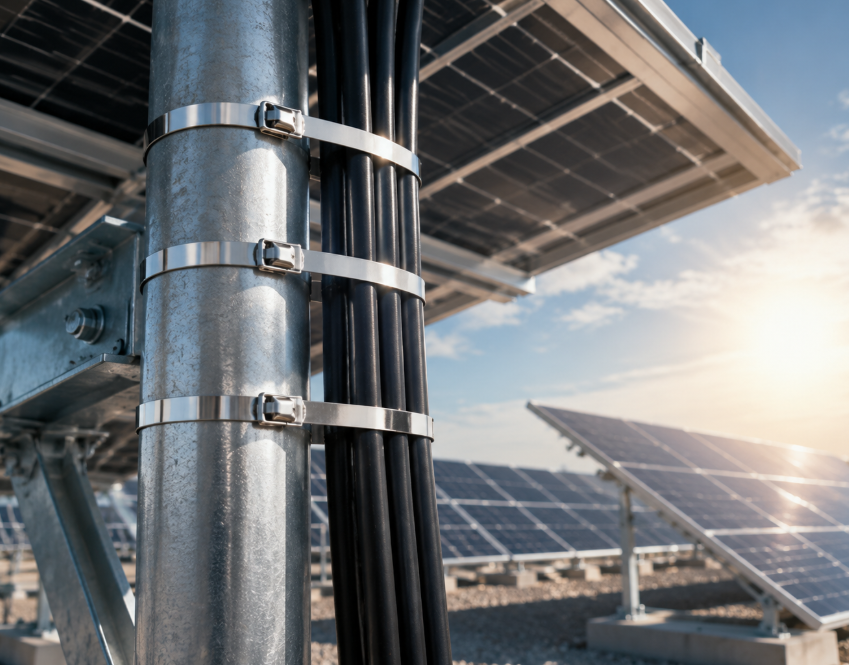
Stainless steel cable ties
The right choice depends on the installation environment.
UV Resistant Cable Ties for Solar Panel Installations
Solar panels are usually installed in locations with maximum sunlight exposure.
That is exactly why UV resistance matters.
Ultraviolet radiation can gradually affect plastic materials, reducing their flexibility and durability.
UV resistant cable ties are designed to better handle long-term outdoor exposure.
They are commonly used for:
-
Solar panel cable management
-
Rooftop solar installations
-
Ground-mounted solar farms
-
Outdoor electrical equipment
The goal is simple:
Keep cables secure not only during installation, but throughout the operating life of the solar system.
Stainless Steel Cable Ties for More Demanding Environments
Not every solar project has the same requirements.
Some installations are located in challenging environments:
-
Coastal areas with salt exposure
-
Industrial areas with chemicals
-
High-temperature locations
In these applications, stainless steel cable ties can provide additional durability.
Compared with standard plastic solutions, stainless steel cable ties offer:
-
High mechanical strength
-
Excellent temperature resistance
-
Better corrosion resistance in demanding environments
They are often considered for projects where long-term reliability is more important than the lowest initial cost.
Cable Management Also Affects Solar Maintenance
A solar system is designed for long-term operation.
However, maintenance is still necessary.
Technicians may need to:
-
Inspect wiring
-
Replace damaged components
-
Troubleshoot electrical issues
-
Upgrade system equipment
A poorly organized cable system makes these tasks more difficult.
Good cable management allows technicians to quickly identify cable routes and access important components.
For large solar projects, easier maintenance can reduce downtime and labor costs.
Small Components Support Renewable Energy Reliability
Solar power systems are built from many different components.
Some are large and expensive.
Some are small and inexpensive.
But every component has a role.
Cable ties and cable management accessories may seem like minor details compared with solar panels and inverters.
However, they help protect wiring, improve installation quality, and support long-term system performance.
In renewable energy projects, reliability is created through every detail.
Final Thoughts
A successful solar installation is not only about producing energy today.
It is about continuing to perform years into the future.
Proper cable management helps protect electrical systems from environmental challenges, reduces maintenance issues, and improves the overall reliability of solar projects.
For engineers and installers, choosing the right cable management solution is a small decision that can have a big impact.
Because in solar power systems, the smallest components often help protect the biggest investments.