2026-08-06
How Cable Management Improves Reliability in Industrial Automation Systems
Modern factories are becoming more automated every year.
Robots, sensors, motors, and control systems work together to improve production efficiency.
But behind every automated machine, there is one thing connecting everything together:
Cables.
Power cables.
Signal cables.
Communication cables.
Without proper cable management, even advanced automation equipment can experience unnecessary problems.
Cable management may seem like a small detail, but it plays an important role in equipment reliability, maintenance efficiency, and production stability.
Industrial Machines Create Challenging Cable Environments
Unlike simple electrical installations, industrial automation equipment often operates under demanding conditions.
Machines may experience:
-
Continuous vibration
-
Moving parts
-
Heat generated by motors
-
Oil and chemical exposure
-
Frequent maintenance
Cables installed inside these systems need proper protection and organization.
Poor cable management can lead to:
-
Cable damage
-
Loose connections
-
Difficult troubleshooting
-
Longer maintenance time
Why Cable Routing Matters in Automation Equipment
Inside an industrial machine, hundreds of cables may need to share limited space.
A good cable management design helps:
-
Separate power and signal cables
-
Prevent unnecessary bending
-
Reduce mechanical stress
-
Improve accessibility
For machine builders, organized wiring also makes assembly faster and future upgrades easier.
Choosing the Right Cable Ties for Industrial Automation
Different areas of a machine may require different solutions. One‑size‑fits‑all cable ties cannot satisfy all working conditions across industrial equipment. Selecting proper cable tie types according to actual application scenarios helps extend service life of wiring systems and lower unexpected maintenance costs.
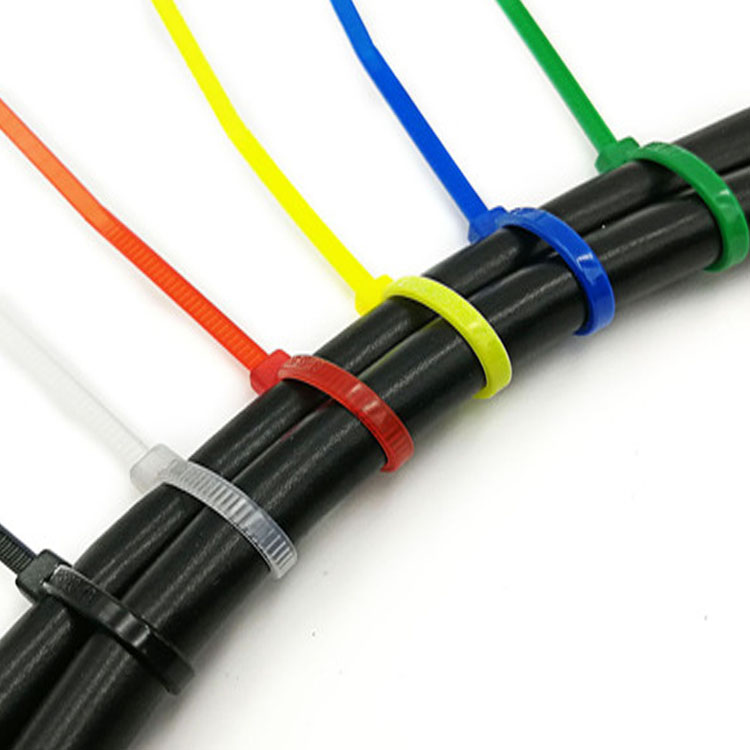
Control Cabinets Standard nylon cable ties are commonly used for organizing internal wiring inside control cabinets. With stable tensile strength and good insulation performance, they neatly bundle scattered wires, prevent wiring chaos, and keep cabinet interiors tidy. They work well for static wiring that seldom gets disassembled, covering most general‑purpose cabinet wiring projects.
Moving Equipment Releasable cable ties can be useful where technicians need frequent access. Unlike one‑time locking cable ties, these reusable ties can be opened and retightened quickly without cutting. For robotic arms, sliding assemblies and other moving equipment requiring repeated adjustment, inspection or partial rewiring, releasable cable ties greatly speed up modification and troubleshooting work.
High Temperature Areas Heat stabilized cable ties are suitable for areas exposed to continuous heat. Near motors, heating modules and other heat‑generating components, ordinary nylon ties will age, turn brittle and lose locking force under long‑term high‑temperature exposure. Heat‑stabilized modified nylon material resists thermal ageing, maintains stable mechanical performance under sustained high‑heat surroundings, and avoids cable loosening risks caused by tie failure.
Heavy Industrial Equipment Heavy‑duty cable ties provide stronger support for larger cable bundles. Large‑scale production machinery often gathers thick, heavy cable harnesses. Ordinary standard ties may break under heavy load. Heavy‑duty cable ties feature wider strap width and enhanced locking structure, delivering high pull‑out strength. They firmly secure bulky, heavy cable bundles against vibration, pull and mechanical impact in heavy‑industry operating environments.
Maintenance-Friendly Cable Management Saves Time
A machine failure does not always come from a major component.
Sometimes the problem is:
A damaged cable.
A loose connection.
A wire that was difficult to trace.
Good cable management helps technicians quickly locate and repair problems.
In modern factories, reducing downtime is just as important as improving production speed.
Small Components Support Industrial Reliability
Automation systems are made up of thousands of components.
Large components determine machine capability.
Small components help maintain long-term operation.
Cable ties, connectors, and cable accessories may seem simple.
But they help keep industrial equipment organized, protected, and easier to maintain.